
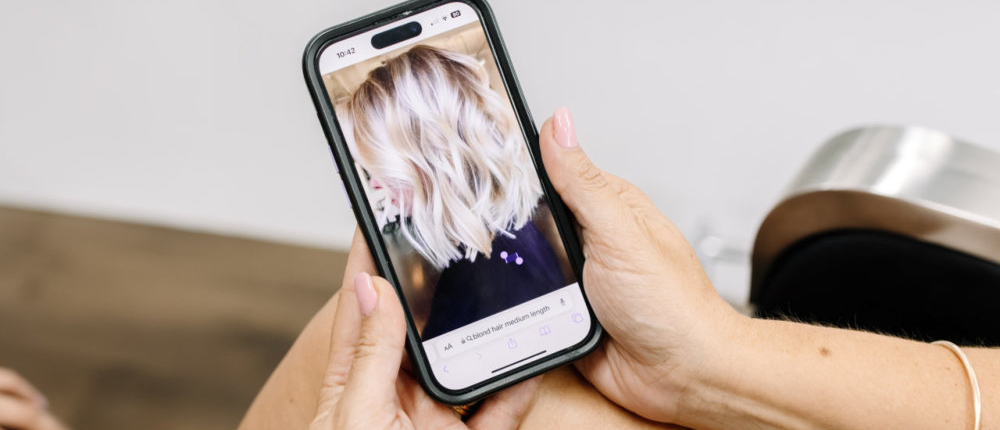
How to Make Your Hair Colour Last Longer Between Salon Visits
Fresh hair colour has a very particular kind of confidence attached to it. The tone looks right, the shine is there, the colour feels balanced and everything somehow looks more polished. The frustrating part is that hair colour does not stay frozen in time. It gradually changes as you wash it, style it, expose it to heat and sun, and simply get on with life.
The good news is that there are plenty of ways to help your colour stay looking fresher for longer without turning your bathroom into a chemistry lab. The goal is not to obsess over every wash or avoid styling your hair altogether. It is to understand the small habits that make the biggest difference, so your colour continues to look intentional between appointments.
How long your colour lasts will depend on the type of colour you have, your natural hair, the condition of your hair and the tone you are trying to maintain. Blonde, brunette, red, balayage and grey blending can all behave differently, which is why aftercare should be tailored to your actual colour rather than based on one generic rule.
Start With the Right Colour Plan
One of the easiest ways to make your colour last longer is to choose a colour that is designed to age well from the beginning.
If your colour is dramatically different from your natural base, regrowth may become noticeable sooner. If you are maintaining a very cool blonde, you may notice warmth returning as toner fades. If you have a rich copper or red, the vibrancy may soften more quickly than a neutral brunette.
That does not mean you should avoid those colours. It simply means understanding the maintenance before you commit to them.
Techniques such as balayage, lived-in colour, softer highlights and grey blending can often make the grow-out less obvious because the colour is designed to transition more naturally into your roots.
If extending the time between major colour appointments is important to you, our guide to the best low-maintenance hair colours is a useful place to start.
Do Not Wash Your Hair More Often Than You Need To
Every time you wash coloured hair, some fading can occur over time. That does not mean you need to avoid washing your hair for as long as humanly possible, but unnecessary daily washing can speed up the loss of tone and vibrancy.
If your scalp and hair are comfortable with fewer washes, spacing them out may help your colour look fresher for longer. For some people, that might mean washing every second or third day. For others, more frequent washing is necessary. There is no prize for forcing your hair into a routine that does not suit your scalp.
The important thing is to avoid washing simply out of habit when your hair does not actually need it.
When you do wash, focus shampoo mainly on the scalp rather than aggressively scrubbing the coloured lengths. The lather that runs through the hair as you rinse is usually enough to cleanse the ends without unnecessary friction.
Use Products Designed for Coloured Hair
The products you use at home can make a noticeable difference to how your colour behaves between appointments.
A shampoo and conditioner formulated for colour-treated hair are generally designed to cleanse without unnecessarily stripping the hair and to help maintain softness and shine. This becomes especially important if your hair has been lightened, because lightened hair may be more porous and can lose moisture more easily.
Your colourist may also recommend specific products depending on your shade. Blondes may benefit from occasional toning products, while brunettes and reds may need something different entirely.
More product is not always better. Using a strong toning shampoo every wash, for example, can leave some blondes looking dull, overly cool or even slightly purple. Follow the advice for your particular hair rather than assuming that stronger maintenance equals better maintenance.
Be Careful With Hot Water
A very hot shower feels wonderful, especially in winter, but your hair colour may not love it quite as much as you do.
Hot water can make the hair swell and may contribute to faster colour loss over repeated washing. You do not need to wash your hair in freezing water, but lukewarm water is usually a gentler choice for colour-treated hair.
A cooler final rinse can also help the hair feel smoother and look shinier, which can make colour appear fresher even when you are several weeks out from your appointment.
Heat Styling Can Affect How Fresh Your Colour Looks
Hair straighteners, curling irons and hot tools are part of everyday styling for many people, and there is no need to abandon them completely. The issue is repeated high heat.
Excessive heat can leave the hair looking dry and dull, and colour rarely looks its best on hair that has lost shine. Blonde and lightened hair can be particularly sensitive because it has already been chemically processed.
Use a heat protectant, avoid unnecessarily high temperatures and try not to repeatedly pass a straightener over the same section of hair.
If you find that a significant amount of your daily routine involves straightening, smoothing or controlling frizz, it may also be worth looking at whether the problem is bigger than colour maintenance. Our Nanoplasty service is designed to make hair smoother and easier to manage, which can reduce the amount of daily heat styling some clients need.
Protect Your Hair From the Australian Sun
Sun exposure can gradually affect both natural and coloured hair, and this is especially relevant in Australia where strong UV exposure is simply part of everyday life.
Prolonged sun exposure can contribute to fading, particularly in brighter colours and lighter shades. Blonde may become warmer, reds and coppers may lose vibrancy, and brunette colour can gradually look less rich.
You do not need to hide indoors every time the sun comes out. A hat is one of the simplest forms of protection if you are going to be outside for a long period, particularly at the beach or around the pool.
Some leave-in hair products also include UV protection, which can be useful if you spend a lot of time outdoors.
Chlorine and Salt Water Can Change Your Colour
Swimming is another factor worth thinking about, especially if you have blonde or lightened hair.
Chlorinated pool water can affect the feel and appearance of coloured hair, and porous blonde hair can sometimes pick up unwanted tones from minerals or pool chemicals. Salt water can also leave the hair feeling dry and rough, which makes colour look less glossy.
Before swimming, wetting your hair with fresh water can reduce the amount of pool or salt water it absorbs. Applying a leave-in conditioner can provide another layer of protection, and rinsing your hair thoroughly after swimming is a good habit.
If you swim regularly, tell your colourist. It can affect both the colour plan and the products they recommend for home.
Keep Blonde Tones Fresh Without Overdoing It
Blonde hair often does not actually become darker between appointments. Instead, the tone changes.
As a salon toner gradually fades, warmer undertones can become more visible. This is why blonde that looked creamy or cool immediately after the appointment may start looking more golden several weeks later.
Purple shampoo can help neutralise yellow tones in some blondes, but it should be treated as a maintenance tool rather than an everyday shampoo. Overuse can make the colour appear flat, dull or overly cool.
Sometimes the best solution is a professional toner or gloss appointment between major lightening services. You may not need more foils or balayage at all; you may simply need the tone refreshed.
If you are considering which lightening approach will give you the maintenance level you want, our guide to balayage vs highlights explains how the two techniques differ as they grow out.
Red and Copper Hair Often Need Extra Attention
Red and copper shades are beautiful precisely because they are so vibrant, but that vibrancy can also be what changes fastest.
Warm pigments can gradually fade with repeated washing, heat styling and sun exposure, so maintaining the richness often requires a little more care than a neutral brunette.
Washing only when needed, using colour-safe products and avoiding excessive heat can all help. Depending on the shade, your colourist may also recommend a colour-depositing conditioner or a gloss appointment to refresh the tone without repeating a full colour service.
If you love copper but hate maintenance, it is worth discussing whether a softer, more natural version would suit your lifestyle better than a very vivid shade.
Brunette Colour Can Fade Too
Brunette hair is often assumed to be automatically low maintenance, but rich brown colour can still fade and lose depth over time.
Fresh brunette colour often has beautiful shine and tonal richness. As it fades, it may start to look warmer, flatter or less reflective. A gloss can sometimes restore that richness without the need for a full colour application.
Dimensional brunette can also be easier to live with than one solid shade because subtle variation through the hair helps the colour continue looking intentional as it changes.
Grey Coverage Needs a Different Strategy
If you have permanent colour for full grey coverage, the main maintenance issue may not be fading at all. It may be the new grey hair growing through at the roots.
In that situation, no shampoo or treatment can stop regrowth. The question becomes whether you are comfortable with your current maintenance schedule or whether a softer colour strategy would suit you better.
Some clients eventually move towards Grey Blending, where some of the natural grey is incorporated into the finished colour. That can create a softer transition and make new growth less obvious.
If you are weighing up the two approaches, read our guide to grey blending vs grey coverage.
Keep Your Hair in Good Condition
Colour looks better on hair that feels smooth, moisturised and reflective.
When the hair becomes dry or rough, light does not reflect from the surface as evenly, which can make colour appear dull even if the pigment itself has not changed dramatically.
Using a good conditioner, incorporating a treatment when needed and being gentle with wet hair can all help maintain the overall finish.
If your hair feels particularly dry, brittle or difficult to manage after colouring or lightening, our Hair Treatments can be tailored to what your hair actually needs rather than simply adding more products at home.
Do Not Try to Fix Faded Colour With Box Dye
This can be tempting, particularly when the roots are showing or the colour no longer feels as fresh as it did.
The problem is that applying permanent colour over the entire head to fix a small maintenance issue can create colour build-up, uneven results and complications later when you want to change or lighten the hair.
If your colour looks flat or the tone has faded, the solution may be much simpler than a full recolour. A toner, gloss, root refresh or carefully placed colour may be all that is needed.
If home colour has already created banding, excessive depth or unevenness, our Colour Correction service is designed for more complicated colour situations.
Sometimes You Do Not Need a Full Colour Appointment
One of the best ways to make colour maintenance feel easier is to stop thinking of every salon visit as an all-or-nothing appointment.
You may not need a full head of foils every time. A face-frame refresh, toner, gloss, root touch-up or partial lightening service may be enough to bring the colour back to life.
That depends entirely on the original colour plan. If the colour has been designed with maintenance in mind, smaller appointments can often keep it looking polished between larger services.
Your Colour Routine Should Fit Your Life
The best colour maintenance plan is not the one with the most products or the strictest rules. It is the one you can realistically stick to.
If you know you wash your hair every day, tell your colourist. If you swim several times a week, spend weekends at the beach or straighten your hair every morning, mention that too. Those details can influence which colour, tone and technique will work best for you.
Low-maintenance colour starts in the salon, but it works best when the salon plan and your real-life routine actually match.
For more ideas on creating hair that requires less effort overall, read our complete guide to low-maintenance hair.
Keep Your Colour Looking Better for Longer
You do not need to treat freshly coloured hair like a museum exhibit. You can wash it, style it, swim, go to the beach and live your life.
A few sensible habits can simply help the colour stay brighter, shinier and more balanced between appointments. Use the right products, avoid unnecessary heat, protect your hair when you are spending long periods in the sun or water, and pay attention when your colour needs a small refresh rather than waiting until it needs a major rescue.
If your colour is fading faster than you would like or you are finding the maintenance difficult to keep up with, speak to our Riverstone team about your current routine. Sometimes a small change to your colour technique, tone or home care can make the whole thing significantly easier to maintain.
Frequently asked questions
How can I make my hair colour last longer?
Wash your hair only as often as your scalp and hair need it, use products designed for colour-treated hair, limit excessive heat styling and protect your hair from prolonged sun exposure. The colour technique itself also matters. A colour designed to grow out softly can look fresh for longer even as your natural hair grows.
How often should you wash coloured hair?
There is no ideal number that suits everyone. If your hair and scalp allow it, washing less frequently can help reduce colour fading. Some people are comfortable washing every few days, while others need to wash more often. The aim is not to avoid washing your hair, but to avoid unnecessary washing simply out of habit.
Does hot water make hair colour fade faster?
Repeated washing in very hot water can contribute to colour fading. You don’t need to endure cold showers, but washing coloured hair in lukewarm rather than very hot water is generally a better option.
Why does my hair colour fade so quickly?
Colour can fade for many reasons, including frequent washing, heat styling, sun exposure, swimming and the condition or porosity of your hair. Some shades also naturally require more tonal maintenance than others. If your colour consistently fades faster than expected, talk to your colourist about whether a different colour, technique or home-care routine would work better.
How can I keep blonde hair from turning brassy?
Blonde can appear warmer as salon toner gradually fades. Using an appropriate toning product occasionally may help neutralise unwanted yellow tones, but more is not necessarily better. Overusing purple shampoo can leave some blondes looking dull or overly cool. Sometimes a professional toner or gloss between major colour appointments is the better solution.
How do I stop red or copper hair from fading?
Red and copper tones can lose vibrancy with repeated washing, heat and sun exposure. Using colour-safe products, washing only when necessary, protecting your hair from excessive heat and discussing colour-depositing products or gloss appointments with your colourist can help maintain the richness.
Does swimming fade hair colour?
Regular exposure to chlorine and salt water can affect coloured hair, particularly blonde and lightened hair. Wetting your hair with fresh water before swimming, using a suitable leave-in product and rinsing thoroughly afterwards can help reduce the impact.
Can I refresh my hair colour without having it completely redone?
Often, yes. Depending on your colour, you may only need a toner, gloss, root refresh, face-frame or partial lightening service rather than repeating your entire colour appointment. Your colourist can assess what has actually changed and recommend the smallest service needed to freshen the result.
You may also be interested in …
 https://www.thecuttingroom.net.au/wp-content/uploads/2026/08/Balayage-vs-Highlights.jpg
500
1000
IvanaKKatzAdmin2024
https://www.thecuttingroom.net.au/wp-content/uploads/2025/02/The-Cutting-Room-Black.png
IvanaKKatzAdmin20242026-08-09 18:07:102026-08-09 18:07:10Balayage vs Highlights: Which Is More Low Maintenance?
https://www.thecuttingroom.net.au/wp-content/uploads/2026/08/Balayage-vs-Highlights.jpg
500
1000
IvanaKKatzAdmin2024
https://www.thecuttingroom.net.au/wp-content/uploads/2025/02/The-Cutting-Room-Black.png
IvanaKKatzAdmin20242026-08-09 18:07:102026-08-09 18:07:10Balayage vs Highlights: Which Is More Low Maintenance? https://www.thecuttingroom.net.au/wp-content/uploads/2026/08/How-to-m-ake-your-hair-colour-last.jpg
500
1000
IvanaKKatzAdmin2024
https://www.thecuttingroom.net.au/wp-content/uploads/2025/02/The-Cutting-Room-Black.png
IvanaKKatzAdmin20242026-08-09 18:06:132026-08-09 18:06:13How to Make Your Hair Colour Last Longer Between Salon Visits
https://www.thecuttingroom.net.au/wp-content/uploads/2026/08/How-to-m-ake-your-hair-colour-last.jpg
500
1000
IvanaKKatzAdmin2024
https://www.thecuttingroom.net.au/wp-content/uploads/2025/02/The-Cutting-Room-Black.png
IvanaKKatzAdmin20242026-08-09 18:06:132026-08-09 18:06:13How to Make Your Hair Colour Last Longer Between Salon Visits https://www.thecuttingroom.net.au/wp-content/uploads/2026/08/Low-Maintenance-Haircuts.jpg
500
1000
IvanaKKatzAdmin2024
https://www.thecuttingroom.net.au/wp-content/uploads/2025/02/The-Cutting-Room-Black.png
IvanaKKatzAdmin20242026-08-09 18:04:182026-08-09 18:05:05Best Low-Maintenance Haircuts That Grow Out Beautifully
https://www.thecuttingroom.net.au/wp-content/uploads/2026/08/Low-Maintenance-Haircuts.jpg
500
1000
IvanaKKatzAdmin2024
https://www.thecuttingroom.net.au/wp-content/uploads/2025/02/The-Cutting-Room-Black.png
IvanaKKatzAdmin20242026-08-09 18:04:182026-08-09 18:05:05Best Low-Maintenance Haircuts That Grow Out Beautifully https://www.thecuttingroom.net.au/wp-content/uploads/2026/08/Low-Maintenance-Hair.jpg
501
1000
IvanaKKatzAdmin2024
https://www.thecuttingroom.net.au/wp-content/uploads/2025/02/The-Cutting-Room-Black.png
IvanaKKatzAdmin20242026-08-09 18:01:282026-08-09 18:01:28Grey Blending vs Grey Coverage: Which Is Easier to Maintain?
https://www.thecuttingroom.net.au/wp-content/uploads/2026/08/Low-Maintenance-Hair.jpg
501
1000
IvanaKKatzAdmin2024
https://www.thecuttingroom.net.au/wp-content/uploads/2025/02/The-Cutting-Room-Black.png
IvanaKKatzAdmin20242026-08-09 18:01:282026-08-09 18:01:28Grey Blending vs Grey Coverage: Which Is Easier to Maintain? https://www.thecuttingroom.net.au/wp-content/uploads/2026/08/Low-Maintenance-Hair-Colours.jpg
500
1000
IvanaKKatzAdmin2024
https://www.thecuttingroom.net.au/wp-content/uploads/2025/02/The-Cutting-Room-Black.png
IvanaKKatzAdmin20242026-08-09 17:59:042026-08-09 17:59:04Best Low-Maintenance Hair Colours That Still Look Expensive
https://www.thecuttingroom.net.au/wp-content/uploads/2026/08/Low-Maintenance-Hair-Colours.jpg
500
1000
IvanaKKatzAdmin2024
https://www.thecuttingroom.net.au/wp-content/uploads/2025/02/The-Cutting-Room-Black.png
IvanaKKatzAdmin20242026-08-09 17:59:042026-08-09 17:59:04Best Low-Maintenance Hair Colours That Still Look Expensive https://www.thecuttingroom.net.au/wp-content/uploads/2026/08/Grey-Blending.jpg
500
1000
IvanaKKatzAdmin2024
https://www.thecuttingroom.net.au/wp-content/uploads/2025/02/The-Cutting-Room-Black.png
IvanaKKatzAdmin20242026-08-09 17:57:552026-08-09 18:02:56Low-Maintenance Hair: How to Look Great Without Living at the Salon
https://www.thecuttingroom.net.au/wp-content/uploads/2026/08/Grey-Blending.jpg
500
1000
IvanaKKatzAdmin2024
https://www.thecuttingroom.net.au/wp-content/uploads/2025/02/The-Cutting-Room-Black.png
IvanaKKatzAdmin20242026-08-09 17:57:552026-08-09 18:02:56Low-Maintenance Hair: How to Look Great Without Living at the Salon
