
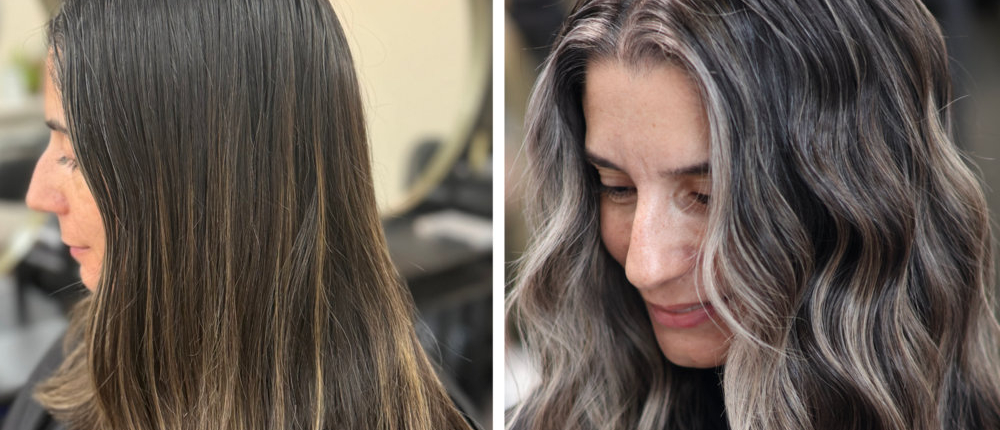
Grey Blending: The Initial Investment and Long-Term Benefits
If you’ve been covering your grey hair for years, you’ll probably know the routine. You leave the salon with beautifully coloured hair, only to notice those familiar silver roots appearing along your parting or hairline a few weeks later. Before long, you’re reaching for a root touch-up spray, rearranging your parting or counting down the days until your next colour appointment.
For many women, it’s not necessarily the grey hair itself that’s frustrating. It’s the constant maintenance involved in keeping it covered.
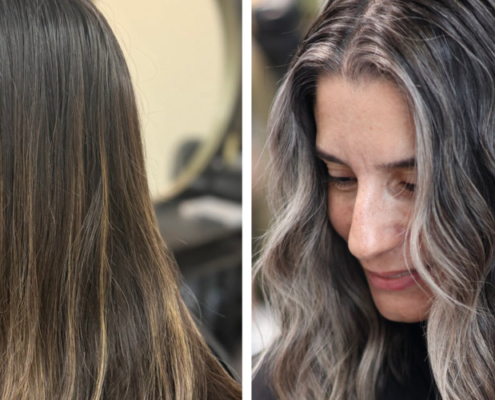
Grey blending offers a different approach. Rather than completely covering your natural grey every few weeks, it uses carefully planned colour techniques to create a softer transition between your existing colour and new growth. The result can be beautifully dimensional hair with less obvious regrowth and greater flexibility between salon appointments.
But there’s something worth understanding before beginning the process. While grey blending can offer considerable long-term benefits, the initial transformation may involve more time, technical work and expense than maintaining traditional permanent colour.
At The Cutting Room in Riverstone, we see clients with very different hair histories and expectations. Some want to gradually embrace their natural silver, while others want to remain predominantly brunette or blonde but reduce the appearance of regrowth. The right approach depends on your hair, your goals and how much maintenance you’re comfortable with.
So what exactly goes into a professional grey blending transformation, and why can the initial investment lead to greater freedom in the years ahead?
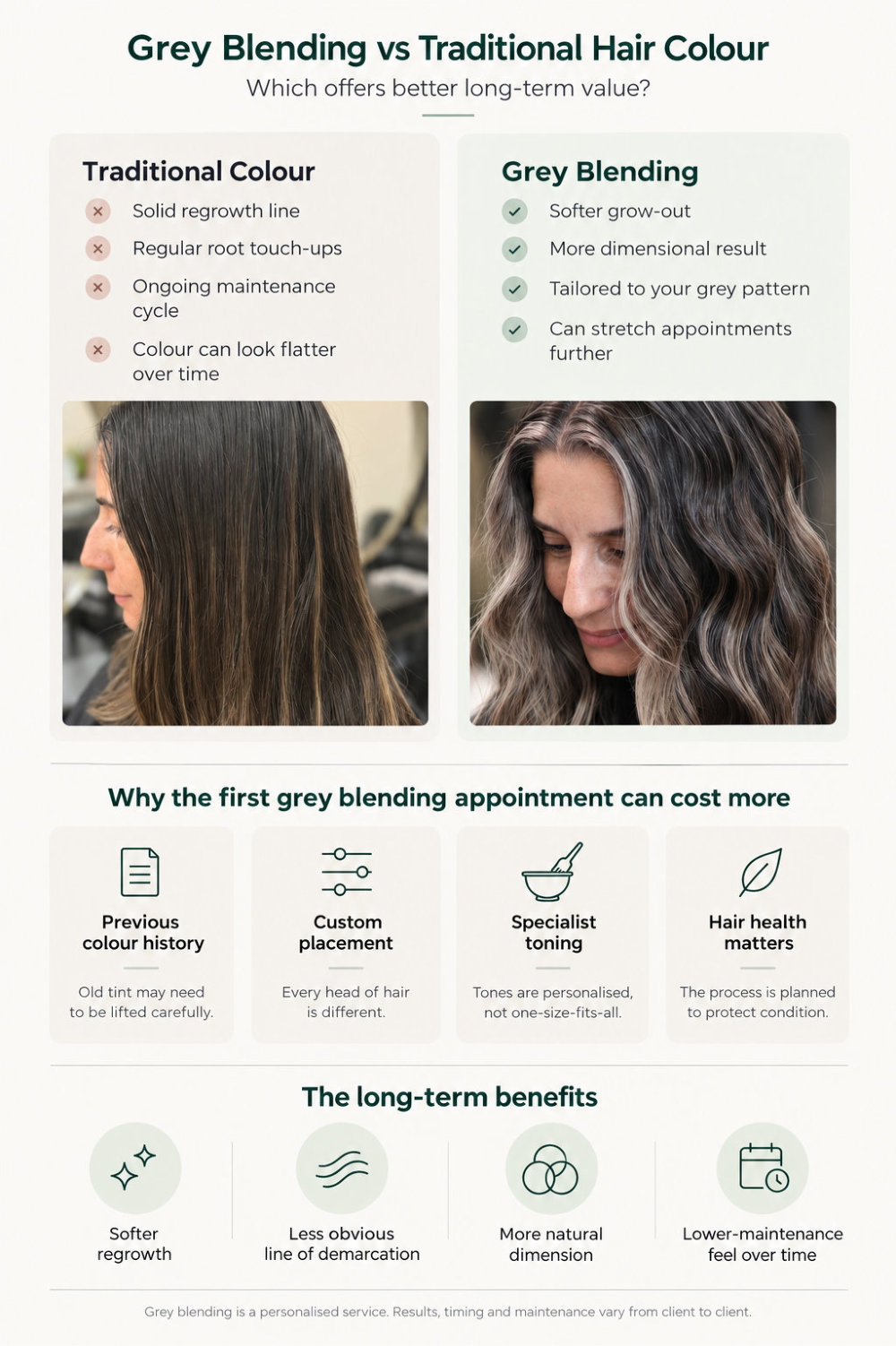
Here’s a simple visual comparison of grey blending and traditional hair colour.
Why Grey Blending Is More Than Just a Few Foils
One of the biggest misconceptions about grey blending is that it’s simply a matter of adding a few blonde highlights to grey hair. In reality, creating a natural-looking blend can require considerable technical expertise, especially when someone has been covering their grey with permanent colour for many years.
Unlike traditional root colouring, where the aim is usually to maintain consistent coverage, grey blending requires the colourist to work with several different shades and levels of natural pigmentation at once.
Before deciding where to place a single foil, an experienced colourist needs to understand how much grey you have, where it’s concentrated, what artificial colour is already present and how much of your natural grey you actually want to reveal.
For example, one client may have mostly silver hair around her temples but very little grey at the back. Another may have an even scattering of grey throughout her hair. A third may have significant natural silver underneath years of dark permanent colour.
Although all three clients are considering grey blending, the techniques required to achieve their preferred results could be completely different.
What Does a Colourist Need to Consider?
A professional grey blending consultation looks at several factors that influence both the initial transformation and the ongoing maintenance plan.
| What We Assess | Why It Matters |
|---|---|
| Amount and distribution of grey | Grey rarely develops evenly. Its location influences highlight placement and how the finished colour will grow out. |
| Your natural base colour | The contrast between your natural colour and grey hair affects which blending techniques and tones may be suitable. |
| Previous colouring history | Years of permanent colour may leave artificial pigment that needs to be reduced before a softer blend can be created. |
| Your desired result | Some clients want to embrace their silver, while others prefer to retain most of their brunette or blonde colour. |
| Hair length, density and condition | These affect the time, products, sectioning and chemical processing involved. |
| Maintenance preferences | How frequently you want to visit the salon and how much natural grey you’re comfortable seeing influence the colour plan. |
Once these factors have been assessed, the colourist can decide which sections to lighten, where to retain depth, whether lowlights are needed, how fine the highlights should be and how to soften the transition as new hair grows.
This is why grey blending is such a personalised service. The aim isn’t simply to make the hair lighter. It’s to create a balanced, flattering result that works with the natural grey rather than constantly fighting against it.
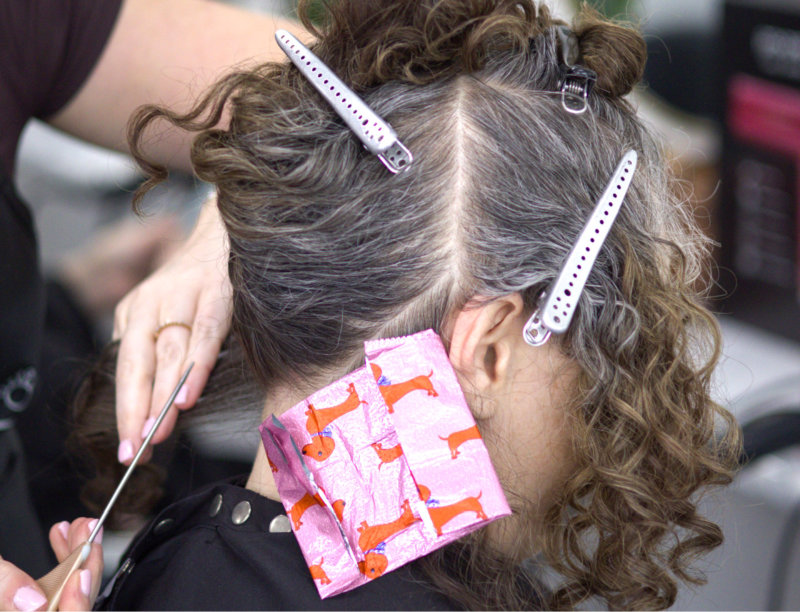
Why the Initial Grey Blending Appointment Can Involve More Work
For many women, the biggest challenge isn’t the natural grey itself. It’s the permanent colour that’s been applied over it for years.
When someone has regularly coloured their roots with a dark brown, brunette or other permanent shade, that artificial pigment remains through the lengths as the hair grows. Over time, different sections can contain different amounts of accumulated colour.
This means a client might arrive with several centimetres of natural grey regrowth and lengths that still contain years of darker colour. Creating a soft transition between the two isn’t always possible by simply adding highlights.
In some cases, the existing colour needs to be reduced before the blending work can begin.
Why Colour Reduction May Be Necessary
Colour reduction involves addressing unwanted artificial pigment already present in the hair. The technique depends on the type of colour previously used, how much has accumulated and the condition of the hair.
Some clients may need one colour reduction process, while others may require further work or multiple appointments. Previously coloured sections can respond differently, and the hair may reveal unwanted warmth or uneven tones as darker pigment is removed.
Once the existing colour has been addressed sufficiently, the colourist can begin creating a more natural transition through highlighting, lowlighting, toning or other blending techniques.
It’s important to understand that colour reduction and lightening aren’t processes that can simply be repeated without limits. Previously processed hair may be vulnerable to dryness and breakage, and there are situations where further chemical work isn’t appropriate.
That’s why a professional assessment is essential. The priority is achieving a beautiful result while managing the risks associated with chemical processing, rather than attempting to complete every transformation in one appointment.
If your hair has accumulated years of permanent colour, our Colour Correction service explains more about the specialised work that may be involved in changing or correcting existing colour.
Why Two Grey Blending Appointments Can Be Completely Different
Imagine two women who both have approximately 50% grey hair.
The first has naturally light brown hair and has only occasionally used semi-permanent colour. She wants to introduce some soft highlights and allow more of her natural grey to become visible.
The second has been applying dark permanent colour for 15 years. She wants to gradually move towards a lighter, more silver result, but still has substantial artificial pigment through the lengths.
Although they have a similar amount of natural grey, their colouring journeys are unlikely to involve the same work.
The first client may need relatively straightforward blending, while the second may require colour reduction, more extensive lightening and a carefully managed transition over several appointments.
This is why a standard price or guaranteed number of sessions cannot accurately represent every grey blending transformation.
The initial investment reflects the time, techniques, products and professional judgement needed for your individual hair, not simply how many grey strands you have.
Grey Blending Costs: The Initial Transition vs Long-Term Maintenance
When comparing the cost of traditional grey coverage and grey blending, it’s important to separate the initial transformation from the maintenance required once the new colour has been established.
Traditional permanent colour often involves a familiar pattern of regular root appointments. Each visit maintains the existing shade and covers newly grown grey hair.
Grey blending may involve a larger initial investment because the colourist is changing that pattern. Instead of continuing to cover every grey strand, the aim is to create a result that incorporates natural regrowth more softly.
For clients transitioning from years of permanent colour, the first several appointments may therefore cost more than their usual root colouring routine. There may be colour reduction, extensive highlighting, toning or several stages involved before the desired blend is achieved.
However, once the transition is established, the maintenance requirements can be quite different.
How the Investment Can Change Over Time
| Stage | What May Be Involved | What It Means for Cost and Maintenance |
|---|---|---|
| Initial Consultation | Assessing grey distribution, natural colour, previous treatments, hair condition and desired outcome. | Establishes a realistic treatment and maintenance plan. |
| Initial Transition | Colour reduction where required, highlighting, lowlighting, toning and personalised blending. | Can involve more time and a greater initial investment than routine root colouring. |
| Establishing the Blend | Additional appointments to refine uneven areas, adjust tones or gradually introduce more natural grey. | Some clients require several appointments before the desired result is fully established. |
| Ongoing Maintenance | Occasional highlights, lowlights, toning or smaller colour refreshes where appropriate. | May allow longer intervals between major appointments and potentially lower ongoing costs. |
| Long-Term Results | Maintaining a softer transition between natural grey and coloured hair as the balance of grey changes. | Many clients may spend less time and money maintaining their colour than they did with frequent permanent root coverage. |
There is no universal point at which grey blending becomes cheaper than traditional colour. The first year may involve more work and greater expense, particularly when significant colour reduction is necessary.
For many clients, the financial benefits may become more noticeable in subsequent years, once the initial transition is complete and fewer major colouring appointments are needed.
But those benefits will always depend on the individual. Someone who wants regular tonal adjustments, very bright highlights or frequent changes to their colour may still choose to visit the salon regularly.
The value of grey blending isn’t only financial. It’s also about reducing the pressure to cover every new grey strand as soon as it appears.
The Hidden Cost of Constant Grey Root Coverage
For women who have been colouring their hair for many years, the expense of traditional grey coverage can become such a familiar part of life that it’s rarely considered as a longer-term total.
Yet the regular salon appointments are only one part of the commitment.
There’s also the time spent arranging appointments, travelling to the salon and maintaining the colour between visits. And for clients whose natural grey contrasts strongly with their permanent colour, regrowth can become noticeable surprisingly quickly.
Some women start seeing a grey stripe along their parting within a couple of weeks, even though the rest of their colour still looks beautiful. This can create the feeling that their hair needs attention long before they’re ready for another full appointment.
That’s where temporary root touch-up products often come into the picture.
What About Root Touch-Up Sprays?
Root concealers and touch-up sprays can be convenient when you want to disguise visible grey between appointments. They provide temporary coverage and can be particularly useful before an event or when you can’t get to the salon.
However, they’re not a permanent solution to regrowth. Depending on the formulation and how frequently they’re used, products can leave residue or build-up around the roots and scalp. Some people may also experience dryness or irritation from certain ingredients.
This doesn’t mean every root spray is harmful or that occasional use should be avoided. It’s simply worth choosing products carefully, following the manufacturer’s directions and paying attention to how your scalp responds.
If you experience itching, redness or irritation, stop using the product and seek appropriate advice. The NHS information on hair dye reactions also explains why symptoms following the use of hair colouring products should not be ignored.
One of the potential advantages of grey blending is that it may reduce the need to constantly disguise new growth. By creating a softer transition, your natural grey can become part of the overall colour rather than a contrasting stripe that needs covering.
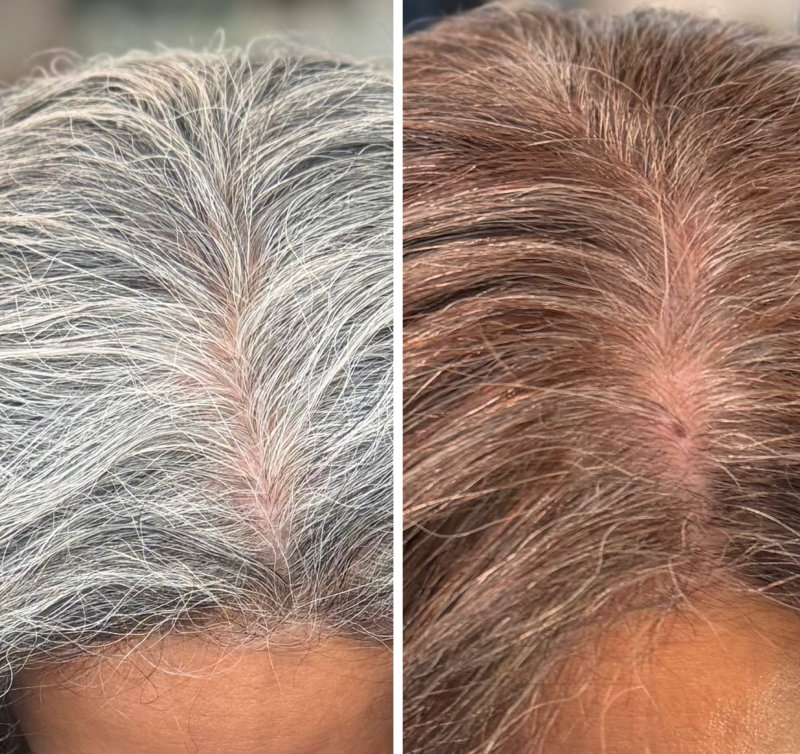
The Benefits of Grey Blending Go Beyond the Price
While potential savings are certainly worth considering, many women choose grey blending for reasons that have very little to do with money.
For some, it’s the relief of not having to plan their lives around root appointments. For others, it’s the freedom to gradually embrace their natural colour without feeling that they’re suddenly becoming completely grey.
And for women who have spent decades covering every silver strand, grey blending can offer a different way of approaching hair colour altogether.
Softer, Less Obvious Regrowth
Instead of a defined contrast between coloured hair and natural grey, carefully placed highlights and lowlights can help create a more gradual transition. The result may remain balanced and attractive for longer as new hair grows.
More Flexibility Between Appointments
Once the initial transition is established, some clients find they can extend the time between major colouring appointments. Occasional toning or smaller refreshes may still be useful, but the need for frequent full grey coverage can be reduced.
A More Personalised Colour
Grey blending allows clients to retain some of their existing brunette or blonde colour while incorporating natural silver. You don’t have to choose between covering every grey strand and letting all your colour grow out.
Less Pressure to Hide Your Natural Grey
Perhaps one of the most appealing benefits is simply feeling more comfortable as your hair grows. When the colour has been designed to work with your natural grey, seeing a few silver strands doesn’t necessarily mean it’s time to book another appointment.
If you’re considering the differences between the two approaches, our articles Grey Blending vs Full Coverage and Grey Blending vs Grey Coverage: Which Is Easier to Maintain? explain the choices in more detail.
Does Grey Blending Mean You’ll Never Need to Colour Your Hair Again?
Not necessarily. Grey blending is often described as a low-maintenance colouring option, but low maintenance isn’t the same as no maintenance.
Depending on the result you want, you may still need occasional highlights, lowlights or professional toning. The blend can also change over time as more of your natural grey grows through, and your stylist may recommend adjusting the colour placement to maintain the overall appearance.
Clients who prefer to retain a substantial amount of brunette colour may have different maintenance requirements from someone whose long-term goal is to become mostly silver.
The condition of the hair remains important too. Previously lightened sections benefit from appropriate conditioning and gentle care. The American Academy of Dermatology’s hair care advice provides useful recommendations for reducing avoidable damage through conditioning and careful styling.
The aim is to find a routine that works for your colour preferences and lifestyle, rather than suggesting that every grey blending client can follow the same appointment schedule.
Is Grey Blending the Right Investment for You?
Grey blending can be particularly appealing if you’re becoming frustrated with regular root coverage, want to soften the contrast of natural grey or would like more flexibility between appointments.
However, it isn’t automatically the best option for everyone. If you love a rich, uniform hair colour and prefer not to see any natural grey, traditional permanent colouring may remain the better choice.
It’s also worth considering whether you’re comfortable with the initial transition. If you’ve been using dark permanent colour for many years, achieving a softer blend may require time, more than one appointment and a larger upfront investment.
A consultation can help you understand what’s realistic before making a decision. Your colourist should explain the potential techniques, the condition of your hair, whether existing colour needs to be reduced and what the ongoing maintenance may involve.
For women who want to gradually embrace their natural grey, our guide to transitioning to grey hair gracefully explores other considerations along the way.
A Beautiful Transition Starts With the Right Advice
Grey blending is about more than changing your hair colour. It’s about creating a result that works with your natural grey, your preferences and the way you want to maintain your hair in the years ahead.
The initial transformation can involve considerable technical work, particularly when years of permanent colour need to be addressed. But for many women, the longer-term benefits of softer regrowth, more flexible appointments and potentially reduced maintenance costs make the journey worthwhile.
Thinking about grey blending? Every transition is different, and the best place to start is with a personalised consultation. Our experienced colourists at The Cutting Room in Riverstone can assess your hair, explain your options and help you plan a beautiful, manageable transition.
Explore our professional Grey Blending service to learn more and arrange a consultation.
Frequently asked questions
Why can the first grey blending appointment cost more than regular colouring?
The first grey blending appointment may involve considerably more technical work than a routine root colour, particularly if you’ve been using permanent hair dye for years. Your colourist may need to reduce existing pigment, carefully place highlights or lowlights, refine the tone and create a softer transition between your natural grey and previously coloured hair. The time, complexity and products required all influence the initial investment.
Does grey blending save money in the long run?
Grey blending can save money over time because many clients need fewer major colouring appointments once the initial transition is complete. However, the first year may cost more if colour reduction or multiple appointments are required. Long-term savings depend on your starting colour, the result you want and how frequently you choose to maintain it. For many clients, the financial benefits become more noticeable in subsequent years.
How many appointments does it take to transition to grey blending?
There’s no standard number of appointments because every grey blending journey is different. Some clients can achieve a softer blend relatively quickly, while others need several sessions, particularly when years of dark permanent colour must be addressed. Your natural grey distribution, previous colouring history, hair condition and desired result all influence the process. A professional consultation can help establish a realistic plan.
Why does old permanent hair colour sometimes need to be removed before grey blending?
Permanent hair colour remains through the lengths as your natural hair grows. If you’ve been covering your greys for years, the darker artificial pigment can create a strong contrast with your natural silver roots. Colour reduction may be necessary before highlights, lowlights and toning can create a softer transition. The process needs careful planning because previously coloured sections may respond differently to further chemical treatments.
Will grey blending mean fewer salon appointments?
For many clients, yes. Grey blending creates a softer transition between natural grey and coloured hair, which can reduce the need for frequent root coverage. However, it’s not completely maintenance-free. You may still need occasional highlighting, lowlights or toning to maintain the desired result. The frequency depends on how much natural grey you want visible and how you prefer your colour to look.
Can I have grey blending without becoming completely grey?
Absolutely. Grey blending doesn’t mean you have to stop colouring your hair or become completely silver. Some clients want to remain predominantly brunette or blonde while reducing the contrast of grey regrowth. Others gradually transition towards more of their natural silver. Your colourist can customise the placement and tones according to how much grey you’d like to reveal and your long-term goals.
Is grey blending suitable for hair that’s been coloured dark for years?
It may be, although the transition can be more complicated. Years of dark permanent colour can leave layers of artificial pigment that need to be reduced before a natural-looking blend can be achieved. Some clients require several appointments, and the hair’s condition may limit how much lightening is appropriate. An experienced colourist can assess your hair and recommend a suitable approach.
Can grey blending help me stop using root touch-up sprays?
Grey blending may reduce how often you feel the need to use root touch-up sprays because the natural grey grows through more softly instead of creating a strongly contrasting regrowth line. While temporary root concealers can be convenient between appointments, frequent use of some products may contribute to build-up or scalp irritation. A well-planned grey blending result can make visible regrowth easier to manage without constantly covering it.
You may also be interested in …
 https://www.thecuttingroom.net.au/wp-content/uploads/2026/10/Grey-Blending-initial-investment.jpg
500
1000
IvanaKKatzAdmin2024
https://www.thecuttingroom.net.au/wp-content/uploads/2025/02/The-Cutting-Room-Black.png
IvanaKKatzAdmin20242026-10-13 11:01:072026-10-13 11:24:00Grey Blending: The Initial Investment and Long-Term Benefits
https://www.thecuttingroom.net.au/wp-content/uploads/2026/10/Grey-Blending-initial-investment.jpg
500
1000
IvanaKKatzAdmin2024
https://www.thecuttingroom.net.au/wp-content/uploads/2025/02/The-Cutting-Room-Black.png
IvanaKKatzAdmin20242026-10-13 11:01:072026-10-13 11:24:00Grey Blending: The Initial Investment and Long-Term Benefits https://www.thecuttingroom.net.au/wp-content/uploads/2026/01/Grey-blending-full-coverage.jpg
500
1000
IvanaKKatzAdmin2024
https://www.thecuttingroom.net.au/wp-content/uploads/2025/02/The-Cutting-Room-Black.png
IvanaKKatzAdmin20242026-01-07 13:03:472026-01-12 11:46:23Grey Blending vs Full Coverage: Which Hair Colour Option Is Right for You?
https://www.thecuttingroom.net.au/wp-content/uploads/2026/01/Grey-blending-full-coverage.jpg
500
1000
IvanaKKatzAdmin2024
https://www.thecuttingroom.net.au/wp-content/uploads/2025/02/The-Cutting-Room-Black.png
IvanaKKatzAdmin20242026-01-07 13:03:472026-01-12 11:46:23Grey Blending vs Full Coverage: Which Hair Colour Option Is Right for You? https://www.thecuttingroom.net.au/wp-content/uploads/2025/03/Grey-blending-8.jpg
500
1000
IvanaKKatzAdmin2024
https://www.thecuttingroom.net.au/wp-content/uploads/2025/02/The-Cutting-Room-Black.png
IvanaKKatzAdmin20242025-03-03 16:28:452025-03-04 10:02:01Common Myths About Grey Hair Debunked
https://www.thecuttingroom.net.au/wp-content/uploads/2025/03/Grey-blending-8.jpg
500
1000
IvanaKKatzAdmin2024
https://www.thecuttingroom.net.au/wp-content/uploads/2025/02/The-Cutting-Room-Black.png
IvanaKKatzAdmin20242025-03-03 16:28:452025-03-04 10:02:01Common Myths About Grey Hair Debunked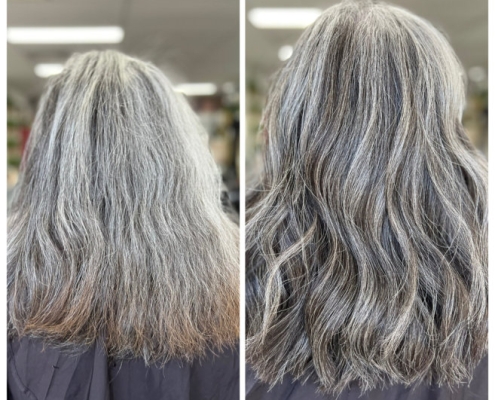 https://www.thecuttingroom.net.au/wp-content/uploads/2026/02/Grey-Blending.jpg
657
657
IvanaKKatzAdmin2024
https://www.thecuttingroom.net.au/wp-content/uploads/2025/02/The-Cutting-Room-Black.png
IvanaKKatzAdmin20242025-03-03 16:27:522026-04-20 09:43:17Top Grey Hair Colour Trends for 2026
https://www.thecuttingroom.net.au/wp-content/uploads/2026/02/Grey-Blending.jpg
657
657
IvanaKKatzAdmin2024
https://www.thecuttingroom.net.au/wp-content/uploads/2025/02/The-Cutting-Room-Black.png
IvanaKKatzAdmin20242025-03-03 16:27:522026-04-20 09:43:17Top Grey Hair Colour Trends for 2026 https://www.thecuttingroom.net.au/wp-content/uploads/2025/03/Grey-blending-11.jpg
500
1000
IvanaKKatzAdmin2024
https://www.thecuttingroom.net.au/wp-content/uploads/2025/02/The-Cutting-Room-Black.png
IvanaKKatzAdmin20242025-03-03 16:26:592026-04-20 09:40:56Grey Blending for Dark Hair: Achieving a Natural Look
https://www.thecuttingroom.net.au/wp-content/uploads/2025/03/Grey-blending-11.jpg
500
1000
IvanaKKatzAdmin2024
https://www.thecuttingroom.net.au/wp-content/uploads/2025/02/The-Cutting-Room-Black.png
IvanaKKatzAdmin20242025-03-03 16:26:592026-04-20 09:40:56Grey Blending for Dark Hair: Achieving a Natural Look https://www.thecuttingroom.net.au/wp-content/uploads/2025/10/TCR2080-Copy.jpg
1600
1067
IvanaKKatzAdmin2024
https://www.thecuttingroom.net.au/wp-content/uploads/2025/02/The-Cutting-Room-Black.png
IvanaKKatzAdmin20242025-03-03 16:25:362026-03-11 12:37:00How to Maintain Grey Hair: Expert Tips for Long-Lasting Shine
https://www.thecuttingroom.net.au/wp-content/uploads/2025/10/TCR2080-Copy.jpg
1600
1067
IvanaKKatzAdmin2024
https://www.thecuttingroom.net.au/wp-content/uploads/2025/02/The-Cutting-Room-Black.png
IvanaKKatzAdmin20242025-03-03 16:25:362026-03-11 12:37:00How to Maintain Grey Hair: Expert Tips for Long-Lasting Shine