
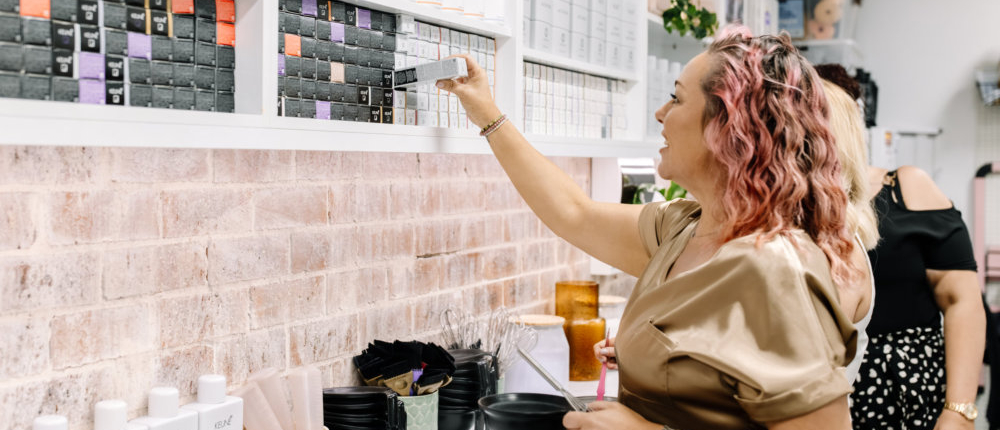
Can a Hairdresser Fix Box-Dyed Hair? What’s Realistically Possible
Box dye can seem like a wonderfully simple solution: choose a shade, apply it at home and emerge with glossy, evenly coloured hair. Sometimes it works perfectly well. Other times, the roots turn bright, the ends become almost black or the finished shade bears only a passing resemblance to the photograph on the box.
If that has happened, there is usually something a professional colourist can do to improve it. However, correcting box-dyed hair is not always quick, and the safest result may require more than one appointment—particularly when several layers of permanent colour have accumulated over time.
A hairdresser can usually improve or correct box-dyed hair, but the process depends on the dye used, the number of previous applications, your hair’s condition and the result you want. Minor tonal problems may be corrected in one visit, while removing years of dark box dye often requires several carefully planned appointments.
Why Is Box-Dyed Hair Difficult to Correct?
The colour visible on the outside does not show everything contained within the hair. Repeated box-dye applications can create several layers of artificial pigment, particularly through the mid-lengths and ends. When a colourist begins removing that pigment, different applications may lift at different speeds and reveal bands of red, orange, yellow or darker colour underneath.
Box dye is also designed to produce a usable result across a wide range of hair types and starting colours. It cannot adjust its formula for natural regrowth, previously coloured lengths, resistant grey hair, porous ends or sections that have been bleached in the past. A professional colourist may use different formulas across these areas because they are unlikely to respond in the same way.
Permanent Colour Cannot Reliably Lighten Permanent Colour
Applying a lighter box dye over dark, previously coloured hair will not usually create the lighter result shown on the packaging. The new colour may slightly affect natural regrowth, but it cannot reliably lift layers of artificial pigment through the lengths. This often leaves brighter roots against dark ends.
To become significantly lighter, some of the existing pigment may need to be professionally removed or carefully lightened first. That process can expose underlying warmth and uneven bands, which then need to be corrected before the final shade is applied.
Every Box-Dye History Is Different
One application of a semi-permanent colour is very different from monthly permanent black dye used for several years. The brand, shade, developer strength, application method and condition of the hair all influence what can be achieved. Henna, progressive dyes and metallic-salt products can create additional complications and must always be disclosed before a correction begins.
For a broader explanation of corrective colour, read our Hair Colour Correction Guide. It explains the consultation, testing and techniques that may form part of a personalised correction plan.
What Box-Dye Problems Can a Hairdresser Fix?
A professional colourist can usually improve most box-dye problems, but the solution depends on what is currently in the hair. Some issues can be adjusted with targeted colour or toning, while others require artificial pigment to be removed before a more even result can be created.
What Could Your Box-Dye Correction Involve?
| Box-Dye Problem | What a Colourist May Do | Realistic Expectation |
|---|---|---|
| Colour is too dark | Reduce artificial pigment, gently lighten selected areas or add dimension with highlights. | One recent application may move more easily than years of dark colour build-up. |
| Patchy or uneven colour | Treat darker and lighter sections separately before balancing the overall shade. | Minor patchiness may improve in one appointment; several colour bands may take longer. |
| Bright or orange roots | Correct the root tone and blend it into the darker mid-lengths and ends. | The immediate contrast may be corrected, but lightening the darker lengths could require another plan. |
| Green, grey or muddy tones | Identify the missing underlying pigment and carefully restore warmth before recolouring. | The tone may improve quickly, although highly porous hair may need ongoing maintenance. |
| Uneven grey coverage | Create a formula suited to the percentage of grey and correct dark build-up through the ends. | Coverage can be improved, or the colourist may recommend transitioning towards softer grey blending. |
| Dark box dye with a blonde goal | Gradually remove pigment using controlled lightening, foils and toning. | Usually a staged transformation, particularly when dark dye has been repeatedly applied. |
| Hair feels fragile or damaged | Pause aggressive lightening, improve the colour with gentler techniques and recommend treatment or trimming. | The final colour goal may need to wait until the hair is strong enough to continue. |
Box Dye That Is Too Dark
Hair that has become darker than expected may be improved using professional colour-removal techniques, gentle cleansing or carefully placed highlights. The colourist will assess whether the darkness comes from one recent application or years of pigment build-up. Heavily saturated ends usually take longer to lighten than natural regrowth or sections that have been coloured less frequently.
Removing dark colour does not automatically reveal your natural shade underneath. Permanent dye changes the hair, and the first exposed colour may be red, orange or uneven. The hair often needs further balancing, toning or recolouring before it looks intentional.
Patchy or Uneven Box Dye
Patchiness may develop when sections are missed, the hair is not fully saturated or porous areas absorb more pigment than healthier sections. A colourist may need to treat each area differently, removing excess pigment from darker sections while adding colour back into lighter ones.
Applying another all-over shade rarely solves this evenly. It may cover the lighter patches while making the darker areas even deeper, which creates a new problem for the next correction appointment.
Bright or Orange Roots
Natural roots often respond more readily to box dye than previously coloured lengths. Warmth from the scalp can also speed up processing, leaving the roots brighter, warmer or lighter than the rest of the hair. This is particularly noticeable when a lighter colour is applied over dark artificial pigment.
A colourist may correct the root tone while blending it into the darker lengths, or recommend a broader plan to gradually lighten the remaining build-up. The safest option depends on how much contrast is present and whether your long-term goal is lighter or darker.
Green, Grey or Muddy Colour
Unwanted green or muddy tones may appear when a cool shade is applied over light or highly porous hair. They can also occur when warm underlying pigments have been removed and are not replaced before the hair is coloured darker. A colourist may need to restore warmth before applying the intended shade.
Adding another ash colour can intensify the unwanted tone, while choosing a very warm shade without professional guidance may push the result too far in the opposite direction. Correcting the balance requires an understanding of what pigments are missing and what is already present.
Uneven Grey Coverage
Box dye may cover some grey hairs while leaving others translucent or resistant. Repeatedly applying permanent colour through the full length can then create dark build-up on the ends while the regrowth still fails to cover evenly. A professional formula can be adjusted for the percentage of grey, the natural base and the result you want.
If you are considering a softer transition rather than continuing with solid coverage, professional grey blending may help reduce the contrast between natural grey regrowth and previously coloured hair.
Dark Box Dye When You Want to Go Blonde
Moving from dark box dye to blonde is often possible, but it is one of the more demanding colour corrections. Years of dark pigment may lift unevenly and reveal strong red or orange tones before the hair becomes light enough for the desired blonde.
The American Academy of Dermatology explains that lightening hair by more than three shades generally requires stronger peroxide and can cause more damage. For this reason, a gradual transformation using carefully planned foils and lightening may be safer than attempting to reach a very light shade in one appointment.
What Determines Whether Box Dye Can Be Corrected?
The answer is not based only on the shade you can currently see. A colourist needs to consider the type of dye used, how many times it has been applied, what was underneath it and whether the hair is strong enough for further chemical processing.
The Type of Dye Used
Semi-permanent, demi-permanent and permanent colours behave differently within the hair. Some deposit pigment closer to the surface and gradually fade, while permanent colour creates a more lasting change. Products sold as temporary or semi-permanent can also stain light, bleached or highly porous hair for much longer than expected.
Henna, progressive dyes and products containing metallic salts require particular caution. Always bring the packaging or provide the exact product name if possible. Your colourist may recommend a strand test before applying lightener or another chemical formula.
How Many Times the Colour Has Been Applied
One recent application is usually less complicated than years of repeated box dye. Every time colour is pulled through the full length, more pigment may accumulate in areas that are already dark. The ends can eventually contain many overlapping applications, while the roots may contain only one.
This uneven build-up creates bands that lift at different speeds. The colourist may need to use different formulas and processing times across the hair rather than applying one remover or lightener from roots to ends.
Your Natural Colour and Previous Services
Your natural starting colour affects which underlying pigments will appear during lightening. Previous highlights, bleach, salon colour, perms, smoothing treatments and colour removers can also change how individual sections respond. Even services completed many months ago may still affect the lengths and ends.
If you have had a smoothing treatment, tell your colourist exactly when it was performed. Our article Will Nanoplasty Affect My Hair Colour? explains why the timing and order of chemical services matter.
The Condition and Porosity of Your Hair
Healthy sections may tolerate controlled lightening, while fragile or highly porous sections may be at greater risk of breakage. Chemical treatments can alter the cuticle and internal structure of the hair, affecting its strength and the way it absorbs colour. A peer-reviewed review of hair structure and degradation discusses how bleaching and other chemical processes can damage hair fibres.
If the hair feels gummy, overly stretchy, brittle or breaks easily, your colourist may recommend delaying further lightening. Treatments, a trim or a darker interim shade may be more appropriate while the hair recovers.
How Different Your Desired Colour Is
Correcting dark brown box dye to a more even brunette may be possible relatively quickly. Moving from black box dye to pale blonde involves far more pigment removal and usually places greater stress on the hair. The larger the change, the more likely it is that several appointments will be needed.
Your desired result may also need to change as the correction progresses. If the hair reveals strong warmth or begins showing signs of weakness, a warmer or darker shade may be the safest stopping point for that appointment.
What a Strand Test Reveals
A strand test allows the colourist to apply the proposed product to a small, discreet section of hair. It can show how quickly the artificial pigment lifts, which underlying colours appear and whether the strand remains strong enough to continue.
The result cannot predict every section perfectly, particularly when the colour history is uneven, but it provides valuable information. If the test strand reacts poorly or shows excessive weakness, the colourist may need to change the plan before treating the rest of the hair.
How Does a Hairdresser Correct Box-Dyed Hair?
Correcting box dye usually involves more than applying a professional colour over the top. Your colourist first needs to identify what is present, determine how much can be safely removed and create a more even base. The exact process will depend on whether the goal is to go lighter, darker, warmer, cooler or simply make the existing shade look more balanced.
Step 1: Consultation and Colour History
Your colourist will examine the roots, mid-lengths and ends while asking what products have previously been applied. Bring photographs, packaging or product names if you have them. Include colours you used months ago, because the pigment may still be present even when the shade appears to have faded.
The consultation should also cover your desired result, maintenance expectations, likely appointment time and estimated cost. If the transformation requires several sessions, your colourist should explain what can reasonably be achieved during the first visit.
Step 2: Testing the Hair
A strand test may be performed to see how the hair responds to colour remover or lightener. The test can reveal hidden bands, unexpected warmth and areas that are too fragile for further processing. A patch test may also be required before certain colour products are applied.
Step 3: Removing or Reducing Artificial Pigment
When the hair is too dark, the colourist may use a professional colour remover, controlled lightening or a combination of techniques. Different sections may need to be treated separately because natural roots, previously coloured lengths and heavily saturated ends will not lift evenly.
The hair may look red, orange or patchy after artificial pigment begins to move. This is generally an intermediate stage rather than the finished result. Your colourist will assess what has been revealed before deciding how to balance the colour.
Step 4: Evening Out the Base
Darker bands may need further lightening, while lighter or porous areas may need missing pigment restored. Highlights, lowlights or a root blend can also help soften uneven sections without forcing every strand to the same colour level.
This detailed work is one reason box-dye corrections can take several hours. Applying one formula over the entire head would be quicker, but it may recreate the same unevenness the appointment is intended to fix.
Step 5: Toning or Applying the New Colour
Once the base is sufficiently even, the colourist can neutralise unwanted tones or apply the agreed shade. The final colour may be warmer or darker than your long-term goal if the hair has reached its safe processing limit. Further lightening can then be planned for a later appointment.
Step 6: Treatment, Cut and Aftercare
Corrected hair may benefit from bond-building or conditioning support, depending on the processes used and the condition of the hair. Damaged ends may also need to be trimmed to improve the finished appearance and reduce ongoing splitting or breakage.
Your colourist will recommend appropriate products, explain how often to wash and advise whether toning or maintenance appointments are needed. Our guide to hair repair treatments explains the different professional options available for chemically processed hair.
You can book a free hair consultation at The Cutting Room before committing to a correction. This allows our colourists to assess your box-dye history, hair condition and goals before recommending a personalised plan.
What Is Realistically Possible in One Appointment?
One appointment may be enough when the box dye is relatively recent, the desired colour is close to the current shade and the hair remains in good condition. A colourist may be able to soften unwanted warmth, improve uneven coverage, blend bright roots or create a more balanced brunette within a single visit.
Removing years of dark pigment, correcting several colour bands or moving to a substantially lighter shade usually requires more patience. The first appointment may focus on lifting some of the build-up, evening out the colour and creating a wearable result rather than reaching the final shade immediately.
Results That May Be Possible in One Appointment
- Softening a shade that is slightly too warm or cool.
- Blending bright roots into darker lengths.
- Improving minor patchiness or uneven coverage.
- Adding dimension to an overly solid colour.
- Moving to a similar or slightly darker shade.
- Creating a more even interim colour before future lightening.
Corrections More Likely to Need Several Appointments
- Removing years of permanent black or dark brown box dye.
- Moving from dark artificial colour to pale blonde.
- Correcting several visible bands through the hair.
- Repairing patchy or overlapping bleach applications.
- Working with fragile, highly porous or over-processed hair.
- Correcting hair containing several different home-colour products.
Why Pushing the Hair Further Is Not Always Worth It
Bleaching removes pigment, but excessive processing can damage both the outer surface and internal structure of the hair. A peer-reviewed study examining excessively bleached hair found increasing structural damage as bleaching treatments were repeated. Continuing past the hair’s safe limit may produce a lighter colour, but it can also cause severe dryness, loss of strength and breakage.
A responsible colourist may stop at a warmer, darker or more blended shade than the final colour you requested. This is not a lack of ambition; it is a decision to preserve the hair so the transformation can continue safely. Hair attached to your head remains rather useful for the next appointment.
Read How Long Does Hair Colour Correction Take? for a detailed explanation of appointment length, staged corrections and the factors that affect your timeline.
What Should You Avoid Doing After Box Dye Goes Wrong?
When you dislike your colour, waiting for a professional appointment can feel unbearable. However, every additional product changes the starting point and may reduce the options available to your colourist. The safest approach is usually to stop, document what has been used and have the hair assessed before attempting anything else.
Do Not Apply Another Box Dye Immediately
Adding another permanent colour may temporarily disguise patchiness, but it can also create deeper pigment build-up and additional bands. Choosing a darker shade is particularly tempting because it appears more likely to cover everything evenly. Unfortunately, the darker colour will eventually become another layer that must be removed if you want to lighten your hair later.
Do Not Bleach the Darkest Sections Yourself
Dark areas may contain different amounts of artificial pigment, so they are unlikely to lift at the same speed. Applying bleach only where the colour looks darkest can cause overlap onto previously lightened sections and create breakage. The hair may also reveal strong red or orange tones that require professional balancing.
Do Not Rely on Home Colour-Removal Remedies
Clarifying shampoo may encourage some fading, but household remedies and repeated harsh washing are unlikely to remove permanent pigment evenly. Products such as dishwashing liquid, baking soda or improvised bleach mixtures can leave the hair dry and fragile without producing a usable colour.
Do Not Overuse Purple or Blue Shampoo
Purple and blue products can help maintain certain blonde shades, but they cannot remove dark colour or correct uneven lifting. Highly porous areas may absorb the pigment quickly and turn dull, grey, purple or blue while warmer sections remain unchanged. Ask your colourist whether a toning product is appropriate before adding another shade to the situation.
Do Not Hide Your Colour History
Your colourist is not interested in judging the number of boxes involved; they need accurate information to work safely. Tell them about permanent colours, bleach, henna, toners, removers and chemical treatments. A carefully edited version of events may result in an unsuitable formula or an unexpected reaction during processing.
Do Not Ignore Signs of Damage or Scalp Irritation
If your hair feels gummy, overly stretchy, brittle or begins snapping, avoid further chemical processing until it has been assessed. If your scalp is burning, blistering, swollen or developing a rash, rinse the product thoroughly and seek appropriate medical advice.
The US Food and Drug Administration advises against applying hair dye when the scalp is irritated, sunburnt or damaged. It also recommends following the product directions carefully and completing the advised skin test before each use.
If you are wondering when it may be safe to colour again, read How Soon Can You Recolour Your Hair After a Colour Disaster?
How to Prepare for a Box-Dye Correction Consultation
A successful correction begins with understanding exactly what is already in your hair. Before the consultation, gather as much information as possible about the products you have used and the order in which they were applied. This helps the colourist identify potential pigment build-up, previous lightened sections and areas that may respond unpredictably.
Bring the Product Packaging
If you still have the box, bring it with you or take clear photographs of the brand, shade number and ingredient information. If several products were used, include all of them. A shade described as “dark brown” does not tell the colourist whether it was permanent, semi-permanent, cool-toned, warm-toned or mixed with a particular developer.
Write Down Your Colour Timeline
List approximately when each colour, bleach, toner or remover was applied and whether it covered the entire head or only the regrowth. Include professional services, smoothing treatments, perms and henna. Even an older service may still affect the mid-lengths and ends.
Take Photographs in Natural Light
Photograph the current colour from the front, back and both sides before it fades or changes further. Bring inspiration images showing the colour you would eventually like, but also include shades you want to avoid. Natural-light photographs are more useful than images taken under warm bathroom lighting or heavily filtered social media photos.
Be Open to an Interim Result
Your desired colour may still be achievable, but it may not be safe to reach it during the first appointment. Discuss alternative shades that would make the current colour look more balanced while creating a better base for future lightening. A rich brunette, softer bronde or warmer blonde may be a sensible stage rather than the final destination.
Ask About Time, Cost and Maintenance
Find out how long the first appointment is likely to take, what it may cost and whether further sessions are expected. Ask what is included in the service and which home-care products will be needed afterwards. An honest plan should explain the likely process without promising an exact result before the hair has been tested.
Book a free consultation at The Cutting Room so our colourists can examine your hair and explain what is realistically possible before any corrective work begins.
Looking After Your Hair Following Box-Dye Correction
Corrected hair may have been through pigment removal, lightening, filling, toning or several processes during the same appointment. It may feel drier or behave differently afterwards, particularly through sections that already contained repeated colour applications. Following the recommended aftercare helps preserve the new shade and reduces additional stress on the hair.
Use Products Recommended for Your Finished Colour
Choose a gentle shampoo and conditioner suited to colour-treated hair. Your colourist may also recommend a moisture treatment, bond-building product or colour-depositing product, depending on the condition and final shade. Avoid adding purple shampoo, protein treatments or heavy oils simply because they are popular; the wrong product can make porous hair feel worse or alter the colour unevenly.
Reduce Heat While the Hair Recovers
Limit straighteners, curling tools and very hot blow-drying, particularly during the first few weeks. Use heat protection and the lowest effective temperature when styling is necessary. The American Academy of Dermatology recommends reducing heated styling and allowing hair to air-dry partly to help prevent further damage.
Handle Wet Hair Gently
Wet hair is more vulnerable to stretching and breakage, especially after chemical processing. Gently squeeze out excess water rather than rubbing with a towel, and detangle carefully with an appropriate brush or wide-tooth comb. Begin at the ends and work upwards instead of dragging through knots from the roots.
Keep Your Follow-Up Appointment
If the correction is being completed in stages, attend the next appointment within the timeframe recommended by your colourist. Waiting too long may introduce significant regrowth or allow the interim toner to fade unevenly. Equally, trying to speed things up with home colour between visits can undo the progress already made.
Our guide to hair repair treatments explains which professional treatments may support dry, porous or chemically processed hair. If your correction involves moving towards blonde, you may also find How to Go Blonde Without Damaging Your Hair helpful.
Box Dye Is Usually Fixable—but It May Take Time
A box-dye result you dislike does not necessarily mean you are stuck with it forever. A professional colourist can often improve colour that is too dark, patchy, brassy, muddy or uneven. The important question is how much can be safely achieved without placing the condition of your hair at unnecessary risk.
One recent application may be relatively straightforward to adjust, while years of dark permanent colour can require several stages. The first appointment may create a more even, wearable shade rather than the final colour you want. That gradual approach can feel frustrating when you are ready for an immediate transformation, but it gives your hair a far better chance of reaching the long-term result in good condition.
Before applying another box dye, bleach or home colour remover, let an experienced colourist assess what is already present. At The Cutting Room, we will explain what can realistically be achieved, whether strand testing is needed and how many appointments may be involved. You will also receive an upfront estimate before corrective work begins.
Book a free hair consultation at our Riverstone salon to discuss your box-dye history and desired result. You can also learn more about our professional colour correction service before booking your appointment.
Frequently asked questions
Can a hairdresser remove box dye?
A hairdresser can often remove or reduce artificial pigment using professional colour removers, controlled lightening or a combination of techniques. Complete removal may not be possible in one appointment, particularly when dark permanent dye has been repeatedly applied.
Can a hairdresser fix patchy box dye?
Patchy box dye can usually be improved, but each section may need to be treated differently. Dark areas may require pigment removal, while lighter or more porous sections may need colour added back in to create a more balanced result.
Can black box dye be removed?
Black box dye can often be lightened gradually, but it may reveal red, orange and uneven bands as the pigment lifts. Removing years of black dye generally requires several appointments and may not safely result in pale blonde hair.
Can I put a lighter box dye over dark box dye?
A lighter box dye will not reliably lighten previously applied permanent colour. It may lighten natural regrowth while leaving the lengths dark, creating brighter roots and additional colour bands.
How long does it take to correct box-dyed hair?
Minor tonal problems may be corrected in one appointment, while complex corrections can take several sessions over several months. The timeframe depends on the dye used, the number of applications, the condition of your hair and how different your desired colour is.
Will correcting box dye damage my hair?
Removing dark artificial pigment or lightening the hair can cause dryness and structural damage. A professional colourist reduces unnecessary damage by testing the hair, using controlled techniques, avoiding overlap and stopping when the hair reaches its safe processing limit.
Can I go blonde after using dark box dye?
Going blonde may be possible, but it usually requires a gradual process. Dark artificial pigment often lifts through red and orange stages, and the hair may need several carefully spaced appointments before it is light enough for the desired blonde.
Why did box dye make my roots orange?
Natural regrowth can lift more easily than previously coloured lengths, and warmth from the scalp may speed up processing. This can leave bright or orange roots against darker mid-lengths and ends.
Why did box dye make my ends almost black?
The ends may contain several overlapping applications and can also be more porous than the roots. They may absorb more pigment every time colour is pulled through the full length, gradually becoming darker and more saturated.
Should I wash my hair repeatedly to fade box dye?
Fresh colour may soften slightly after several washes, but aggressive washing can leave the hair dry without removing permanent pigment evenly. Avoid dishwashing liquid, baking soda and improvised colour-removal mixtures, and ask a colourist for advice instead.
How soon can I colour my hair again after using box dye?
The safest timing depends on the product used and the condition of your hair and scalp. If the hair feels stretchy, gummy, brittle or prone to breaking—or the scalp is irritated—do not apply another chemical product before having it assessed.
What should I bring to a box-dye correction consultation?
Bring the product packaging or photographs showing the brand, shade and ingredients if possible. You should also bring photographs of your current colour in natural light, previous hair colours and the result you eventually want.
You may also be interested in …
 https://www.thecuttingroom.net.au/wp-content/uploads/2026/07/How-soon-can-you-recolour-your-hair.jpg
500
1000
IvanaKKatzAdmin2024
https://www.thecuttingroom.net.au/wp-content/uploads/2025/02/The-Cutting-Room-Black.png
IvanaKKatzAdmin20242026-07-17 14:54:392026-07-17 14:54:39How Soon Can You Recolour Your Hair After a Colour Disaster?
https://www.thecuttingroom.net.au/wp-content/uploads/2026/07/How-soon-can-you-recolour-your-hair.jpg
500
1000
IvanaKKatzAdmin2024
https://www.thecuttingroom.net.au/wp-content/uploads/2025/02/The-Cutting-Room-Black.png
IvanaKKatzAdmin20242026-07-17 14:54:392026-07-17 14:54:39How Soon Can You Recolour Your Hair After a Colour Disaster? https://www.thecuttingroom.net.au/wp-content/uploads/2026/07/Does-colour-correction-damage-your-hair.jpg
500
1000
IvanaKKatzAdmin2024
https://www.thecuttingroom.net.au/wp-content/uploads/2025/02/The-Cutting-Room-Black.png
IvanaKKatzAdmin20242026-07-17 14:51:372026-07-17 14:51:37Does Colour Correction Damage Your Hair? How a Good Colourist Protects It
https://www.thecuttingroom.net.au/wp-content/uploads/2026/07/Does-colour-correction-damage-your-hair.jpg
500
1000
IvanaKKatzAdmin2024
https://www.thecuttingroom.net.au/wp-content/uploads/2025/02/The-Cutting-Room-Black.png
IvanaKKatzAdmin20242026-07-17 14:51:372026-07-17 14:51:37Does Colour Correction Damage Your Hair? How a Good Colourist Protects It https://www.thecuttingroom.net.au/wp-content/uploads/2026/07/How-long-does-colour-correction-take.jpg
500
1000
IvanaKKatzAdmin2024
https://www.thecuttingroom.net.au/wp-content/uploads/2025/02/The-Cutting-Room-Black.png
IvanaKKatzAdmin20242026-07-17 14:49:072026-07-17 14:49:07How Long Does Hair Colour Correction Take – and Will You Need More Than One Appointment?
https://www.thecuttingroom.net.au/wp-content/uploads/2026/07/How-long-does-colour-correction-take.jpg
500
1000
IvanaKKatzAdmin2024
https://www.thecuttingroom.net.au/wp-content/uploads/2025/02/The-Cutting-Room-Black.png
IvanaKKatzAdmin20242026-07-17 14:49:072026-07-17 14:49:07How Long Does Hair Colour Correction Take – and Will You Need More Than One Appointment? https://www.thecuttingroom.net.au/wp-content/uploads/2026/07/Can-hair-dresser-fix-box-dyed-hair.jpg
500
1000
IvanaKKatzAdmin2024
https://www.thecuttingroom.net.au/wp-content/uploads/2025/02/The-Cutting-Room-Black.png
IvanaKKatzAdmin20242026-07-17 13:42:402026-07-17 13:42:40Can a Hairdresser Fix Box-Dyed Hair? What’s Realistically Possible
https://www.thecuttingroom.net.au/wp-content/uploads/2026/07/Can-hair-dresser-fix-box-dyed-hair.jpg
500
1000
IvanaKKatzAdmin2024
https://www.thecuttingroom.net.au/wp-content/uploads/2025/02/The-Cutting-Room-Black.png
IvanaKKatzAdmin20242026-07-17 13:42:402026-07-17 13:42:40Can a Hairdresser Fix Box-Dyed Hair? What’s Realistically Possible https://www.thecuttingroom.net.au/wp-content/uploads/2026/07/Why-did-my-hair-colour-go-wrong.jpg
500
1000
IvanaKKatzAdmin2024
https://www.thecuttingroom.net.au/wp-content/uploads/2025/02/The-Cutting-Room-Black.png
IvanaKKatzAdmin20242026-07-17 13:39:082026-07-17 13:39:37Why Did My Hair Colour Go Wrong? Common Causes of Patchy, Brassy or Uneven Colour
https://www.thecuttingroom.net.au/wp-content/uploads/2026/07/Why-did-my-hair-colour-go-wrong.jpg
500
1000
IvanaKKatzAdmin2024
https://www.thecuttingroom.net.au/wp-content/uploads/2025/02/The-Cutting-Room-Black.png
IvanaKKatzAdmin20242026-07-17 13:39:082026-07-17 13:39:37Why Did My Hair Colour Go Wrong? Common Causes of Patchy, Brassy or Uneven Colour https://www.thecuttingroom.net.au/wp-content/uploads/2026/07/Hair-colour-correction-guide.jpg
500
1000
IvanaKKatzAdmin2024
https://www.thecuttingroom.net.au/wp-content/uploads/2025/02/The-Cutting-Room-Black.png
IvanaKKatzAdmin20242026-07-17 13:36:472026-07-17 13:36:47Hair Colour Correction: What It Is, When You Need It and What to Expect
https://www.thecuttingroom.net.au/wp-content/uploads/2026/07/Hair-colour-correction-guide.jpg
500
1000
IvanaKKatzAdmin2024
https://www.thecuttingroom.net.au/wp-content/uploads/2025/02/The-Cutting-Room-Black.png
IvanaKKatzAdmin20242026-07-17 13:36:472026-07-17 13:36:47Hair Colour Correction: What It Is, When You Need It and What to Expect
